Gâteau Sablé Breton aux Agrumes Confits et Meringue Italienne


The quest for the perfect sablé is a journey many aspire to, yet few truly master in the home kitchen. It’s not merely about following a recipe; it’s about understanding the fundamental principles that transform humble ingredients into a sublime experience. The Gâteau Sablé Breton, with its characteristic crisp yet tender crumb, demands a respect for technique that separates the casual baker from the aspiring professional. Amateur attempts often result in a cookie that is either too tough, too crumbly, or lacks that signature sandy texture. This is where precision and patience become paramount, ensuring that each bite delivers the melt in your mouth sensation we so deeply crave.
Our approach here is rooted in the ‘sablage’ method, a cornerstone of classic pastry. This technique, when executed with the precision of a seasoned chef, ensures that the fat coats the flour particles before any liquid is introduced. This critical step inhibits excessive gluten development, the very element that leads to a chewy or tough texture in lesser shortbreads. By meticulously working the cold butter into the dry ingredients, we lay the foundation for a sablé that is both delicate and robust, a testament to the power of controlled intervention.
This recipe is an invitation to elevate your baking, to embrace the nuances that define true culinary excellence. It’s about transforming the ordinary into the extraordinary, creating a dessert that speaks of luxury and refined taste. Follow these steps with intention, and you will unlock the secret to a sablé Breton that is undeniably superior – a texture so tender, so yielding, it practically dissolves on the tongue, leaving behind only a whisper of buttery richness and bright citrus notes.

Instructions
The Foundation: Crafting the Sablé Breton’s Structural Integrity
The genesis of this Gâteau Sablé Breton lies in the meticulous construction of its base, a testament to precise technique. Begin by combining cubes of impeccably cold butter with granulated sugar and a whisper of sea salt in a substantial bowl. Employing your fingertips or a pastry blender, a controlled abrasion is key. Work these elements together until the mixture achieves the texture of coarse, uniform sand. This foundational step, known as ‘sablage,’ is paramount. By coating the flour proteins in fat before the introduction of any liquid, we inhibit gluten development, thereby guaranteeing a shatteringly tender crumb and a satisfyingly crisp bite.
Next, introduce the all-purpose flour to this sandy matrix. Continue the gentle manipulation with your fingertips, ensuring each particle of flour is thoroughly enrobed in fat. The objective is a homogenous mixture, reminiscent of wet sand, where no dry flour remains visible. This thorough coating is the architect of the sablé’s characteristic crumble. Subsequently, delicately fold in the egg yolks with a spatula, just until the dough coalesces. Overworking at this stage is a cardinal sin; we seek cohesion, not elasticity. Form the dough into a disc, encase it tightly in plastic wrap, and allow it to rest in the chill of the refrigerator for a minimum of two hours, or ideally, overnight. This crucial resting period allows the fats to solidify, ensuring a controlled spread during baking and contributing to that sought after honeycomb cross section.
The Alchemy of Flavor: Candied Citrus and Sublime Meringue
While the sablé undergoes its transformation in the oven – preheated to a precise 350°F (175°C) and lined with parchment paper – we turn our attention to the vibrant accents. For the candied citrus, combine your chosen citrus peels (a medley offers a more nuanced flavor profile, as per our pro tip) with sugar and water in a small saucepan. Bring this to a gentle simmer over medium heat, stirring only until the sugar dissolves. Then, reduce the heat to low and allow the peels to luxuriate for 15-20 minutes. You are looking for a tender, translucent peel and a syrup that has thickened to a luxurious consistency. Drain them thoroughly and set aside to cool. Simultaneously, prepare for the Italian meringue. In a clean, grease free bowl, whip egg whites with a pinch of cream of tartar until they form a soft, foamy cloud. In a separate small saucepan, combine 1/2 cup sugar and 1/4 cup water. Heat this mixture, stirring until the sugar dissolves, then bring it to a rolling boil. Monitor it with a candy thermometer until it registers a precise 240°F (115°C) – the critical stage for achieving a stable, glossy meringue.
With unwavering precision, slowly stream the scalding hot sugar syrup into the whipping egg whites, taking care to avoid direct contact with the whisk. This controlled introduction of heat cooks the egg whites and transforms them into a silken, stable meringue. Once the syrup is fully incorporated, increase the mixer speed to high and continue whipping for an additional 7-10 minutes. The meringue should be voluminous, glossy, and crucially, cooled completely to room temperature. This meticulous process yields a meringue that is not only visually stunning but also possesses an ethereal lightness that contrasts beautifully with the sablé’s crisp architecture.

The Grand Assemblage: A Symphony of Textures
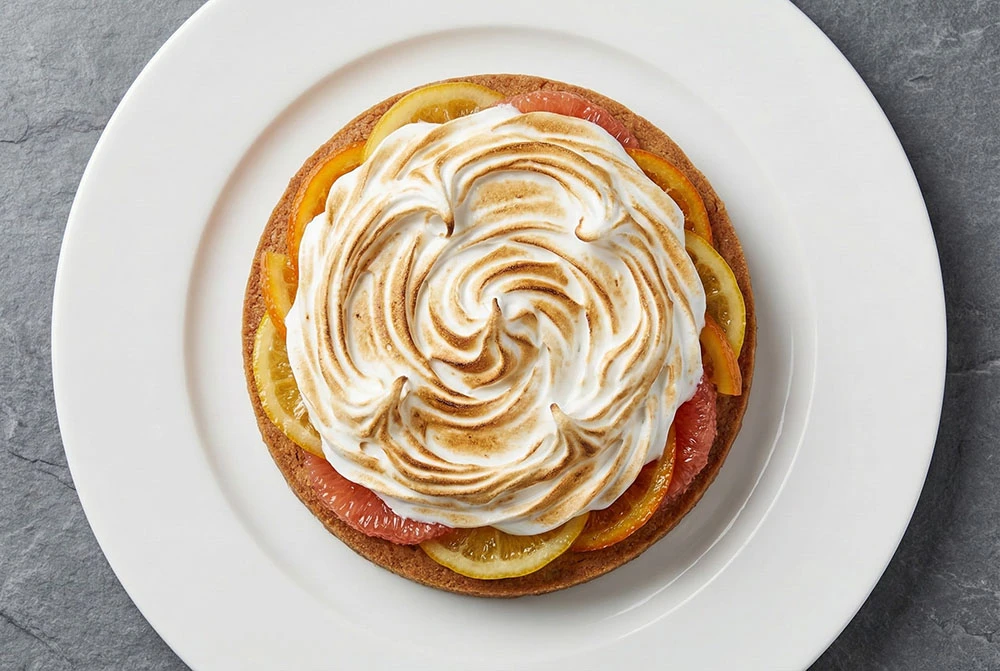
The final act is the artful assembly, where disparate elements converge into a harmonious whole. Once the Sablé Breton base has cooled entirely on the baking sheet, its golden brown edges a testament to its perfect bake, spread the meticulously prepared candied citrus evenly across its surface. This layer provides a bright, zesty counterpoint to the buttery richness of the sablé. Next, generously adorn the citrus layer with the Italian meringue. Whether spooned artfully or piped with decorative flair, aim for dramatic peaks and swirls that promise a delightful textural experience. For an added layer of complexity and visual appeal, consider a brief kiss of flame from a culinary torch to toast the meringue’s peaks, evoking the allure of a perfectly caramelized crème brûlée. This Gâteau Sablé Breton is a structural marvel, designed for immediate enjoyment to fully appreciate the audible crunch of its distinct layers. While the assembled dessert is best savored on the day of its creation, the individual components offer a degree of flexibility: the sablé base can be stored in an airtight container at room temperature for up to three days, and the candied citrus will keep in the refrigerator for up to a week.
The Chef’s Science
The heart of the Sablé Breton’s exquisite texture lies in the meticulous control of gluten development, a concept we achieve through the ‘sablage’ technique. When flour, particularly all-purpose flour, is hydrated, proteins within it – gliadin and glutenin – begin to form gluten strands. While essential for bread, excessive gluten development is the enemy of tender shortbread. In the sablage method, we begin by incorporating very cold, cubed butter and sugar into the flour. The fat from the butter coats the flour particles, creating a physical barrier. This barrier prevents the proteins from readily accessing water when the egg yolks are added later, significantly limiting the formation of long, elastic gluten strands. The result is a dough that, when baked, yields a crumb that is distinctly sandy and friable, shattering delicately rather than chewing stubbornly. This is the hallmark of a professionally executed sablé.
Sourcing the Best
For a Gâteau Sablé Breton that truly sings, the quality of your base ingredients is non negotiable. Pay special attention to your butter; opt for a high fat European style unsalted butter. Look for brands with at least 82% butterfat. The increased fat content contributes to a richer flavor and a more tender, less cakey crumb, as there is less water to interfere with gluten formation. Its cold temperature is also crucial for the sablage method. Secondly, for the candied citrus, select a vibrant mix of fresh, unwaxed citrus peels – oranges, lemons, and grapefruits are ideal. Freshness ensures a bright, aromatic zest that will permeate the dessert, while unwaxed varieties prevent any unwanted chemical aftertaste. A good mix will provide layers of sweet, tart, and slightly bitter notes that beautifully balance the richness of the sablé and the sweetness of the meringue.
Gâteau Sablé Breton aux Agrumes Confits et Meringue Italienne
Ingredients
Sablé Breton Base
- 1 cup 2 sticks unsalted butter, cold and cubed
- 1/2 cup granulated sugar
- 1/4 teaspoon fine sea salt
- 2 cups all-purpose flour
- 2 large egg yolks
Candied Citrus
- 1 cup mixed citrus peels orange, lemon, grapefruit, cut into 1/4-inch dice
- 1/2 cup granulated sugar
- 1/4 cup water
Italian Meringue
- 3 large egg whites
- 1/2 cup granulated sugar
- 1/4 cup water
- Pinch of cream of tartar
Instructions
- For the Sablé Breton: In a large bowl, combine the cold butter cubes, granulated sugar, and sea salt. Using your fingertips or a pastry blender, work the fat and sugar together until the mixture resembles coarse sand. This is the 'sablage' method - coating the flour proteins in fat before liquid is added, which inhibits gluten development and ensures a tender crumb.
- Add the all-purpose flour to the sandy mixture. Continue to work the ingredients with your fingertips until the mixture resembles wet sand and no dry flour remains. The fat should have coated all the flour particles.
- Gently incorporate the egg yolks into the mixture with a spatula, just until the dough begins to come together. Do not overmix. Shape the dough into a disc, wrap tightly in plastic wrap, and refrigerate for at least 2 hours, or preferably overnight.
- Preheat your oven to 350°F (175°C). Line a baking sheet with parchment paper.
- On a lightly floured surface, roll out the chilled dough to about 1/4-inch thickness. Carefully transfer the dough to the prepared baking sheet. You can cut it into desired shapes (rounds, squares) or press it into a tart pan.
- Bake for 20-25 minutes, or until the edges are golden brown and the center is lightly colored. Let cool completely on the baking sheet before handling.
- For the Candied Citrus: While the sablé bakes, combine the citrus peels, sugar, and water in a small saucepan. Bring to a simmer over medium heat, stirring until the sugar dissolves. Reduce heat to low and simmer gently for 15-20 minutes, or until the peels are tender and translucent and the syrup has thickened slightly.
- Drain the candied citrus well and let cool.
- For the Italian Meringue: In a small saucepan, combine the 1/2 cup sugar and 1/4 cup water. Heat over medium heat, stirring until the sugar dissolves. Bring to a boil and cook until the syrup reaches 240°F (115°C) on a candy thermometer.
- While the syrup heats, whip the egg whites and cream of tartar in a clean, grease free bowl of a stand mixer on medium low speed until foamy.
- Once the syrup reaches 240°F (115°C), slowly and carefully pour the hot syrup in a thin, steady stream down the side of the mixing bowl into the whipping egg whites. Avoid hitting the whisk attachment directly.
- Increase the mixer speed to high and continue whipping until the meringue is stiff, glossy, and completely cooled to room temperature (about 7-10 minutes).
- To assemble: Spread the cooled candied citrus over the baked Sablé Breton base. Generously spoon or pipe the Italian meringue over the citrus, creating decorative peaks. You can optionally torch the meringue for a toasted finish.
- Serve immediately or refrigerate until ready to serve. The meringue is best enjoyed fresh.
Notes

Plating & Presentation
To present your Gâteau Sablé Breton with professional élan, focus on clean lines and textural contrast. Begin with the cooled Sablé Breton base as your canvas. Artfully arrange the glistening candied citrus over its surface, ensuring an even distribution. Then, generously apply the Italian meringue. Using an offset spatula, create elegant swirls and peaks, mimicking natural forms. For a dramatic finish, lightly torch the meringue peaks until they achieve a beautiful golden brown hue, introducing a subtle smoky aroma and visual warmth. Alternatively, for a pristine look, leave the meringue soft white. Serve on a chilled white ceramic plate to emphasize the colors and textures. Ensure the rim of the plate is immaculate – a quick wipe with a clean linen cloth is essential. The contrast between the crisp shortbread, the chewy citrus, and the ethereal, slightly toasted meringue creates a multi sensory masterpiece.
