Pan Roasted Chicken Thighs with Lemon Herb Butter & Pan Jus

The quest for the perfect pan roasted chicken thigh is a culinary journey fraught with peril. Too often, home cooks are ensnared by the paradox of dryness, a phenomenon that plagues even the most well-intentioned efforts. The common mistake? Overcooking, driven by a fear of underdone poultry, which ultimately strips the meat of its inherent succulence and transforms tender thighs into something akin to shoe leather. This recipe, however, offers a masterclass in precision, guiding you beyond mere cooking to an art form.
Our method is designed to circumvent these pitfalls, ensuring a result that is both technically flawless and profoundly delicious. By leveraging the power of controlled searing and meticulous butter basting – a technique known as ‘arroser’ – we achieve a sublime balance. The skin becomes shatteringly crisp, a testament to proper moisture management, while the meat beneath remains impossibly tender and juicy. This is not simply dinner; it’s an education in coaxing the absolute best from a humble ingredient.
Forget the bland, the dry, the forgettable. This is the chicken thigh elevated. We focus on building layers of flavor and achieving a textural symphony that speaks to true culinary mastery. Prepare to be liberated from the tyranny of dry chicken and embrace a new standard of excellence at your own table.
Instructions
The Foundation: Achieving Shattered Glass Skin
Our journey begins with the absolute cornerstone of a truly magnificent roasted chicken thigh: the skin. This is not merely a covering; it is the textural triumph, the audible declaration of a perfectly executed dish. To achieve that coveted “shattered glass” crispness, we must first address moisture. Pat your chicken thighs thoroughly, relentlessly, with paper towels. I cannot stress this enough: any residual dampness is the enemy of crispness, a cardinal sin that leads to flabby, disappointing skin. Once bone dry, season them with a generous hand. Employ kosher salt – its larger crystals adhere beautifully and draw out just enough moisture for that perfect sear – and freshly ground black pepper. Season all sides, ensuring every inch is primed for its transformation.
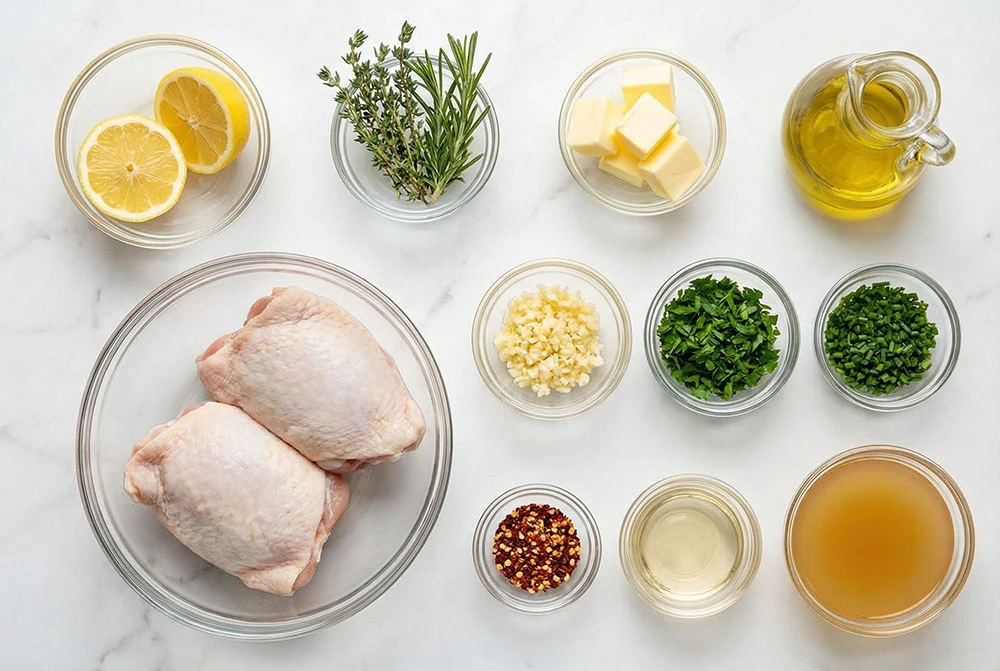
Next, let us prepare the aromatic heart of our dish: the lemon herb butter. In a small bowl, combine your softened butter with finely minced garlic, a bright splash of fresh lemon juice, and a verdant medley of chopped parsley and chives. If you desire a whisper of heat, a pinch of red pepper flakes will suffice. Mix this alchemy until it’s a cohesive, fragrant paste. This butter, infused with citrus and herbs, will be the vehicle for flavor and moisture, a crucial element in the ensuing steps. Set it aside, ready to perform its magic.
The Sizzle and Sear: Building the Flavor Base
Preheat your oven to a robust 400°F (200°C). While it heats, select your weapon of choice: a large, oven safe skillet, ideally cast iron, as it distributes heat with unwavering authority. Add a good glug of olive oil and bring it to a shimmering heat over medium high. Now, the moment of truth. Carefully place the chicken thighs, skin side down, into that searing hot skillet. Resist the urge to move them. Listen for that vigorous, aggressive sizzle – it’s the sound of your culinary ambition taking flight. Allow them to sear undisturbed for 5-7 minutes, until the skin achieves a deep, burnished gold, a visual promise of the crunch to come.
With a confident flip, reveal the beautifully rendered skin. Now, introduce the supporting cast: halved lemon, cut side down, nestled amongst the thighs, along with fragrant sprigs of thyme and rosemary. Reduce the heat to medium. This is where the art of ‘arroser,’ or basting, truly begins. Add two tablespoons of your prepared lemon herb butter to the skillet. As it melts into a fragrant pool, begin the relentless, yet rewarding, process of spooning. Continuously ladle this liquid gold – the melted butter, the rendered chicken fat, the nascent pan juices – over the chicken thighs. This constant attention ensures even cooking, keeps the meat succulent, and builds an unparalleled depth of flavor. Continue this meticulous basting for 3-5 minutes. This technique not only imbues flavor but also helps regulate the pan’s surface temperature, a critical defense against burning the precious skin.
The Oven’s Embrace and The Pan’s Alchemy
Transfer the entire skillet, with its precious cargo, into the preheated oven. Allow the thighs to roast for 15-20 minutes. The goal is an internal temperature of 165°F (74°C) in the thickest part of the thigh, ensuring it’s cooked through without drying out. Once this internal temperature is achieved, remove the skillet from the oven. Carefully transfer the chicken thighs and the now softened lemon halves to a plate or cutting board. Tent them loosely with foil and allow them to rest for 5-10 minutes. This resting period is non negotiable; it allows the juices to redistribute, ensuring every bite is as moist as the last.
While the chicken rests, we turn our attention to the pan. Return the skillet to the stovetop over medium heat. Discard the spent herb sprigs and lemon halves. Carefully pour off most of the rendered fat, leaving behind about a tablespoon – a precious foundation for our sauce. Deglaze the pan with a splash of dry white wine, using a wooden spoon to scrape up all those glorious browned bits, the ‘fond,’ clinging to the bottom. Let the wine simmer and reduce by half, concentrating its flavor. Then, introduce the chicken broth. Bring this to a simmer, allowing it to cook for 2-3 minutes, until it thickens into a light, elegant pan jus. Taste and adjust seasoning with salt and pepper as needed. Finally, stir in the remaining two tablespoons of lemon herb butter. Whisk until it melts and emulsifies into the jus, enriching it with a final burst of aroma and velvety texture.
The Grand Finale: Presentation and Enjoyment
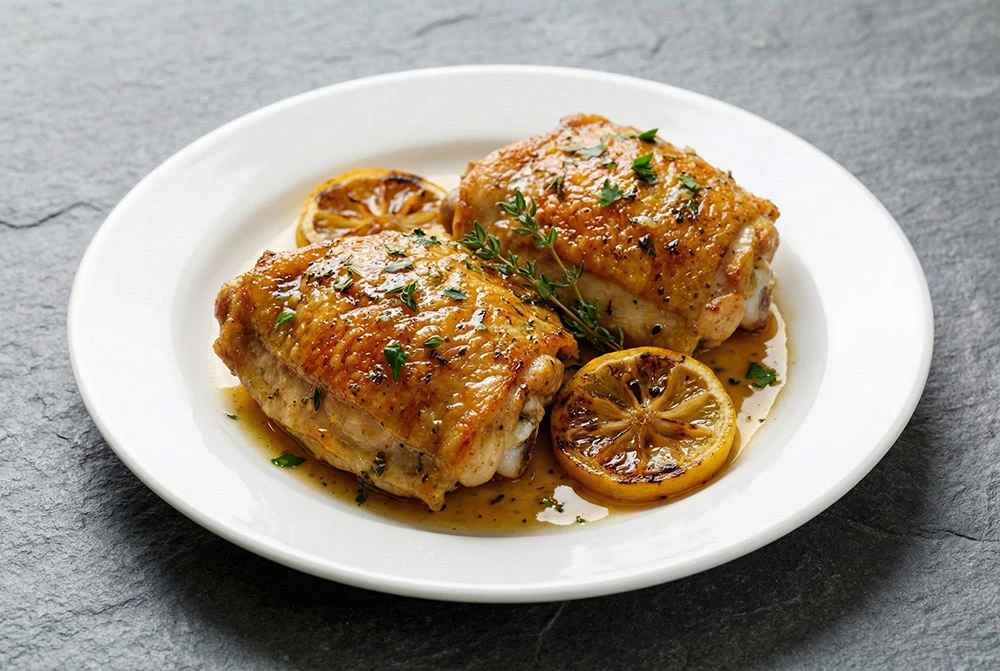
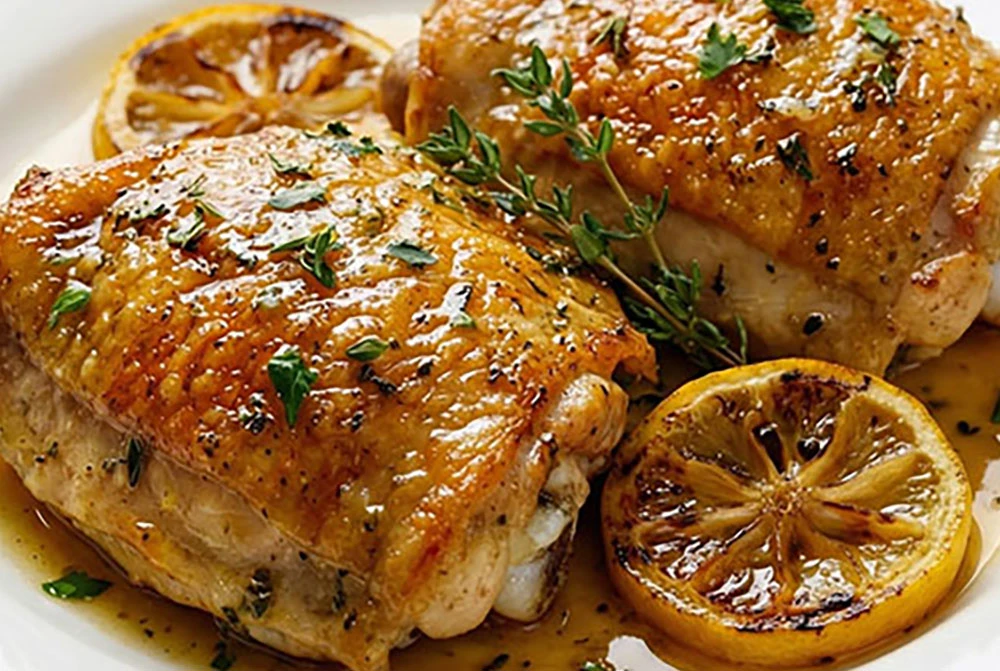
Now, the moment of truth. Arrange the rested chicken thighs on your serving plates. Drizzle them generously with the warm, glistening pan jus. The lemon and herbs, having infused the chicken throughout its cooking, will now find their perfect expression in this rich sauce. The audible crunch of the skin, the tender, flavorful meat, and the vibrant, aromatic jus – this is the symphony of a perfectly roasted chicken thigh. As a Pro Chef, I must reiterate: the constant basting is key to the ‘arroser’ technique; don’t skip this step as it prevents drying and creates a rich, emulsified sauce. For those planning ahead, know that leftover chicken and jus can be stored in an airtight container in the refrigerator for up to 3 days. Reheat gently on the stovetop or in the oven to maintain that glorious moisture and crispness.
The Chef’s Science
The cornerstone of this recipe’s success lies in the masterful application of the ‘arroser’ technique, a French term for ‘to baste’. This is more than just spooning melted fat over chicken; it’s a controlled thermodynamic process. As the butter and pan drippings melt, they create a shimmering, flavorful emulsion. By continuously ladling this mixture over the chicken thighs, we achieve several critical objectives. Firstly, it ensures even cooking by gently transferring heat from the rendered fat and aromatics. Secondly, it prevents the skin from burning by moderating the direct heat from the pan and oven. Most importantly, it bathes the chicken in a constant flow of flavor infused liquid, building an incredibly rich, moist, and tender result while simultaneously contributing to the golden hue of the skin. This constant attention transforms a simple roast into an exercise in refined culinary control.
Sourcing the Best
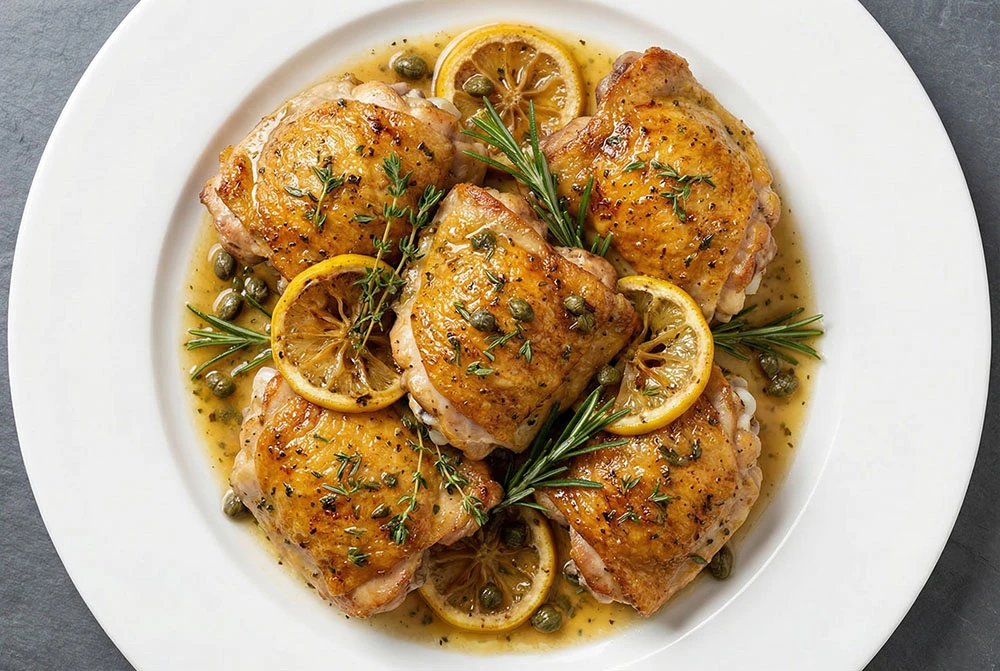
The foundation of any exceptional dish begins with the quality of its ingredients. For these pan roasted chicken thighs, two components deserve particular attention. Firstly, the bone-in, skin on chicken thighs. Look for thighs that are plump and have a good amount of visible fat marbling beneath the skin. This intramuscular fat is crucial for flavor and moisture, rendering during cooking to keep the meat succulent. Opt for thighs that appear a healthy, natural pinkish hue. Secondly, the fresh herbs – thyme and rosemary. When selecting these, ensure the leaves are vibrant green, fragrant, and free from any wilting or discoloration. A strong, fresh aroma is your best indicator of quality and will translate directly into the final flavor of your pan jus and herb butter.
Pan Roasted Chicken Thighs with Lemon Herb Butter & Pan Jus
Ingredients
Chicken & Aromatics
- 4 bone-in skin on chicken thighs (approx. 1.5 lb total)
- 1 tbsp olive oil
- Kosher salt to taste
- Freshly ground black pepper to taste
- 1 lemon halved
- 4 sprigs fresh thyme
- 2 sprigs fresh rosemary
Lemon Herb Butter Baste
- 4 tbsp unsalted butter softened
- 2 cloves garlic minced
- 1 tbsp fresh lemon juice
- 1 tbsp finely chopped fresh parsley
- 1 tsp finely chopped fresh chives
- Pinch of red pepper flakes optional
Pan Jus
- 1/4 cup dry white wine e.g., Sauvignon Blanc or Pinot Grigio
- 1/2 cup low-sodium chicken broth
Instructions
- Pat chicken thighs thoroughly dry with paper towels. This is crucial for achieving crispy skin. Season generously on all sides with kosher salt and freshly ground black pepper.
- Prepare the lemon herb butter: In a small bowl, combine softened butter, minced garlic, lemon juice, chopped parsley, chives, and red pepper flakes (if using). Mix until well incorporated. Set aside.
- Preheat your oven to 400°F (200°C).
- Heat olive oil in a large, oven safe skillet (cast iron is ideal) over medium high heat until shimmering.
- Carefully place chicken thighs, skin side down, into the hot skillet. Sear for 5-7 minutes, undisturbed, until the skin is deeply golden brown and crispy. You should hear a vigorous sizzle.
- Flip the chicken thighs. Add the halved lemon (cut side down), thyme, and rosemary sprigs to the skillet around the chicken.
- Reduce heat to medium. Begin the butter basting process: Add 2 tablespoons of the prepared lemon herb butter to the skillet. As the butter melts, use a spoon to continuously ladle the melted butter and pan drippings over the chicken thighs. This technique, known as 'arroser', ensures even cooking, keeps the chicken moist, and builds incredible flavor. Continue this constant spooning for 3-5 minutes, allowing the fat to regulate the surface temperature and prevent the skin from burning.
- Transfer the skillet to the preheated oven. Roast for 15-20 minutes, or until the internal temperature of the chicken reaches 165°F (74°C) in the thickest part, avoiding the bone.
- Remove the skillet from the oven. Carefully remove the chicken thighs and the lemon halves to a plate or cutting board, tent loosely with foil, and let rest for 5-10 minutes.
- Return the skillet to the stovetop over medium heat. Discard the herb sprigs and lemon halves. Carefully pour off most of the excess fat, leaving about 1 tablespoon in the skillet.
- Deglaze the pan: Add the white wine to the skillet and scrape up any browned bits (fond) from the bottom with a wooden spoon. Let the wine simmer and reduce by half, about 1-2 minutes.
- Add the chicken broth to the skillet. Bring to a simmer and cook for 2-3 minutes, stirring occasionally, until the sauce slightly thickens into a light pan jus. Taste and adjust seasoning with salt and pepper if needed. Stir in the remaining 2 tablespoons of lemon herb butter until melted and emulsified, enriching the jus.
- Serve the rested chicken thighs drizzled generously with the warm pan jus. The lemon and herbs will have infused beautifully into the chicken and the sauce.
Notes
Plating & Presentation
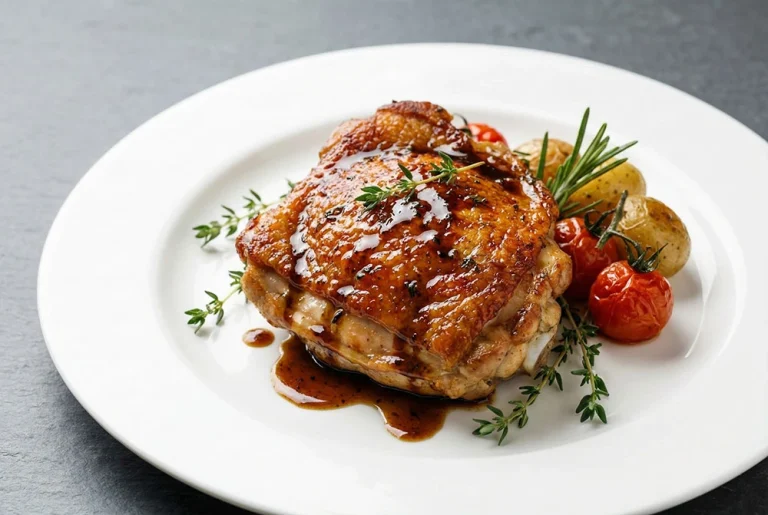
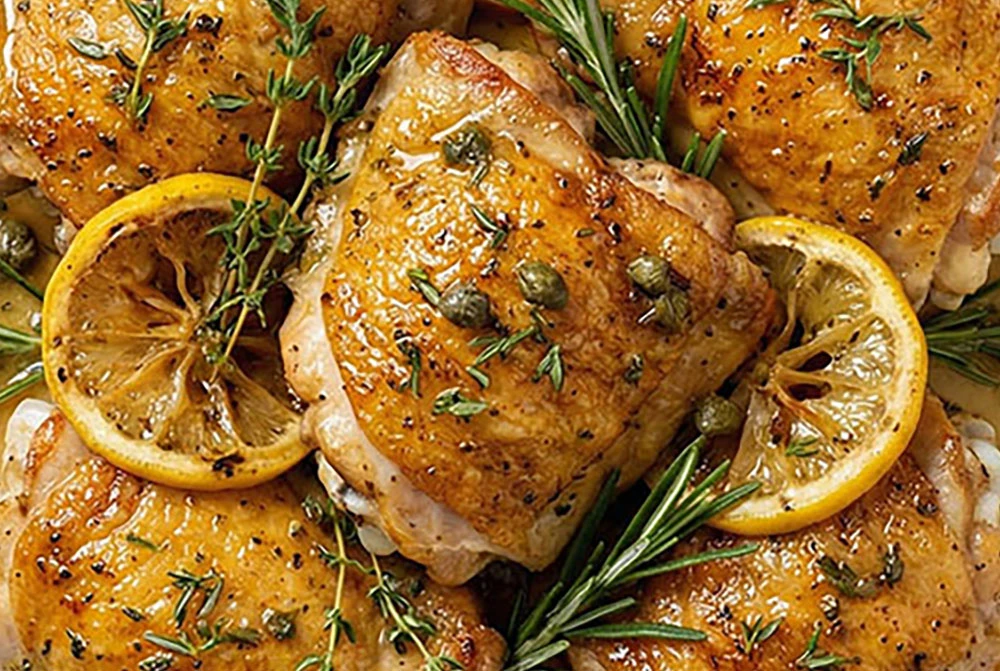
To present these exquisite chicken thighs, begin by warming your serving plates. Place one or two rested chicken thighs slightly off center on a pristine white ceramic dinner plate. Spoon a generous amount of the warm pan jus over and around the chicken, allowing it to pool elegantly. Ensure the sauce is glossy and emulsified, not separated. If desired, a very small scattering of finely chopped fresh parsley or chives can add a touch of vibrant color. Crucially, wipe the rim of the plate with a clean, damp linen cloth to remove any stray droplets of sauce or fat, presenting a perfectly clean canvas that signifies professional attention to detail. The goal is elegance and a clear focus on the star of the dish.